People don’t buy what they don’t understand
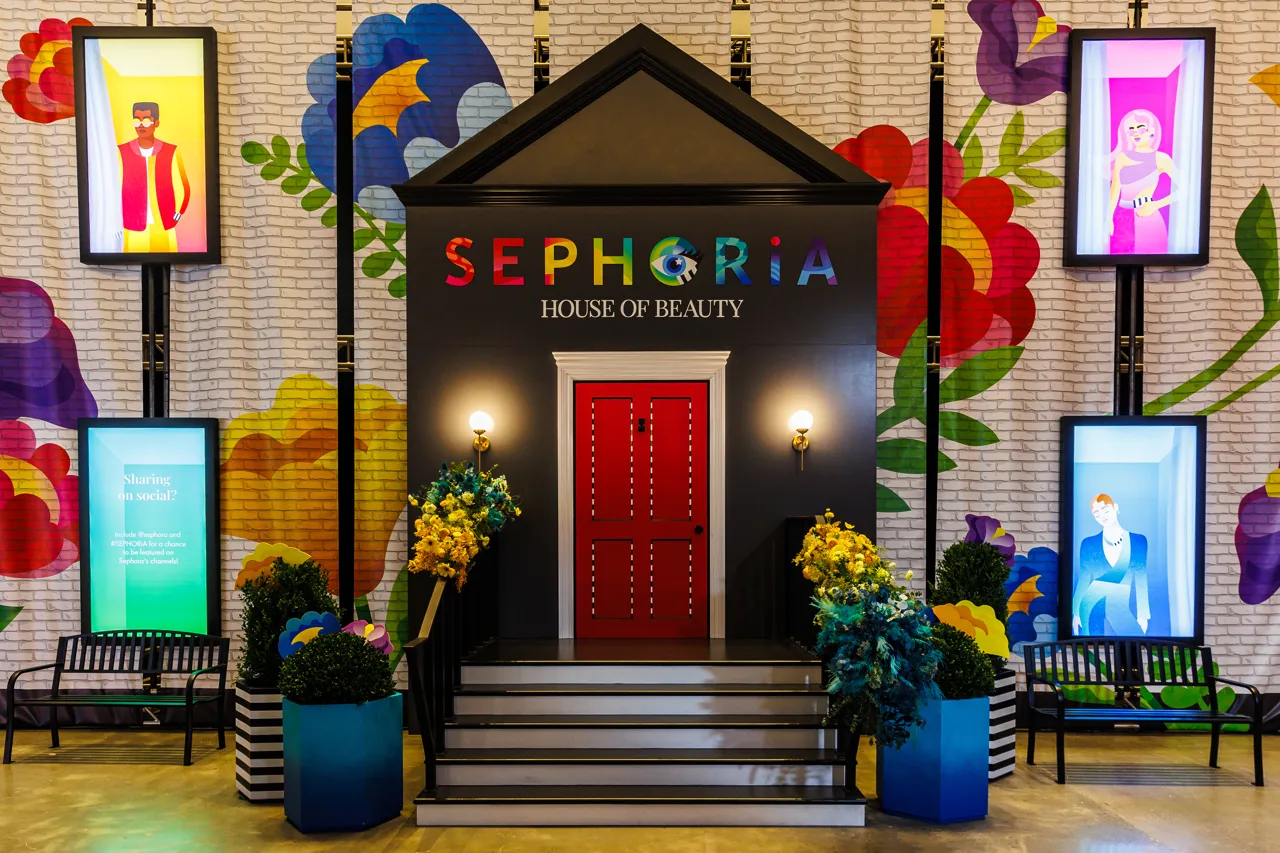
A few months ago, I walked into a tech brand retail space that was trying very hard to impress me. There were projections, interactive screens, motion graphics, and a carefully choreographed lighting system that reacted to movement. The environment was technically sophisticated and visually polished. People were filming it, which is often the metric teams use to convince themselves they have done something right.
But when people approached the products and turned them over in their hands, you could see the same question surface again and again, quietly but unmistakably: what does this actually feel like to use?
The installation had been designed to attract attention. What it failed to do was reduce uncertainty. That gap is where most product marketing quietly breaks down, and it is also where immersive technology, when used properly, becomes genuinely useful. Not because it creates impressive environments, but because it reduces the effort required to understand what something is and how it fits into your life.
When immersive experiences work, they do something both very simple and very difficult.They help people move from curiosity to confidence. They allow customers to picture the product in their home, on their body, within their routine, without having to work too hard to imagine it.
That moment when the product stops being abstract and starts making sense is where conversion begins. The real power of immersive technology is not immersion, it's decision confidence.
For years, digital marketing has been built around capturing attention. Entire systems have been optimised for impressions, views, clicks, and time on screen, with the underlying assumption that visibility would eventually translate into action.
But the purchase decision rarely happens at the moment of attention. It happens later, when someone is left alone with a much more practical set of questions:
Will this fit me?
Will it work in my space?
Is this product actually what I think it is?
Is it worth the price?
Most product communication is not designed to answer those questions. It is designed to present, not to clarify. Photographs, short descriptions, and feature lists leave too much unresolved, which means the customer has to do the work. And the more work the customer has to do to imagine the product, the less likely they are to buy it. Immersive technologies change that equation by shifting effort away from the customer and into the experience. Instead of imagining, people can test a version of reality. Instead of interpreting, they can interact. Instead of guessing, they can evaluate.
What changes is not just the format, but the level of certainty.
Furniture retail makes this particularly clear because the uncertainty is so visible. When people buy furniture online, they are not just choosing an object. They are trying to predict how that object will behave inside a space they already know. Scale, proportion, colour relationships, circulation, all of it has to be mentally simulated.
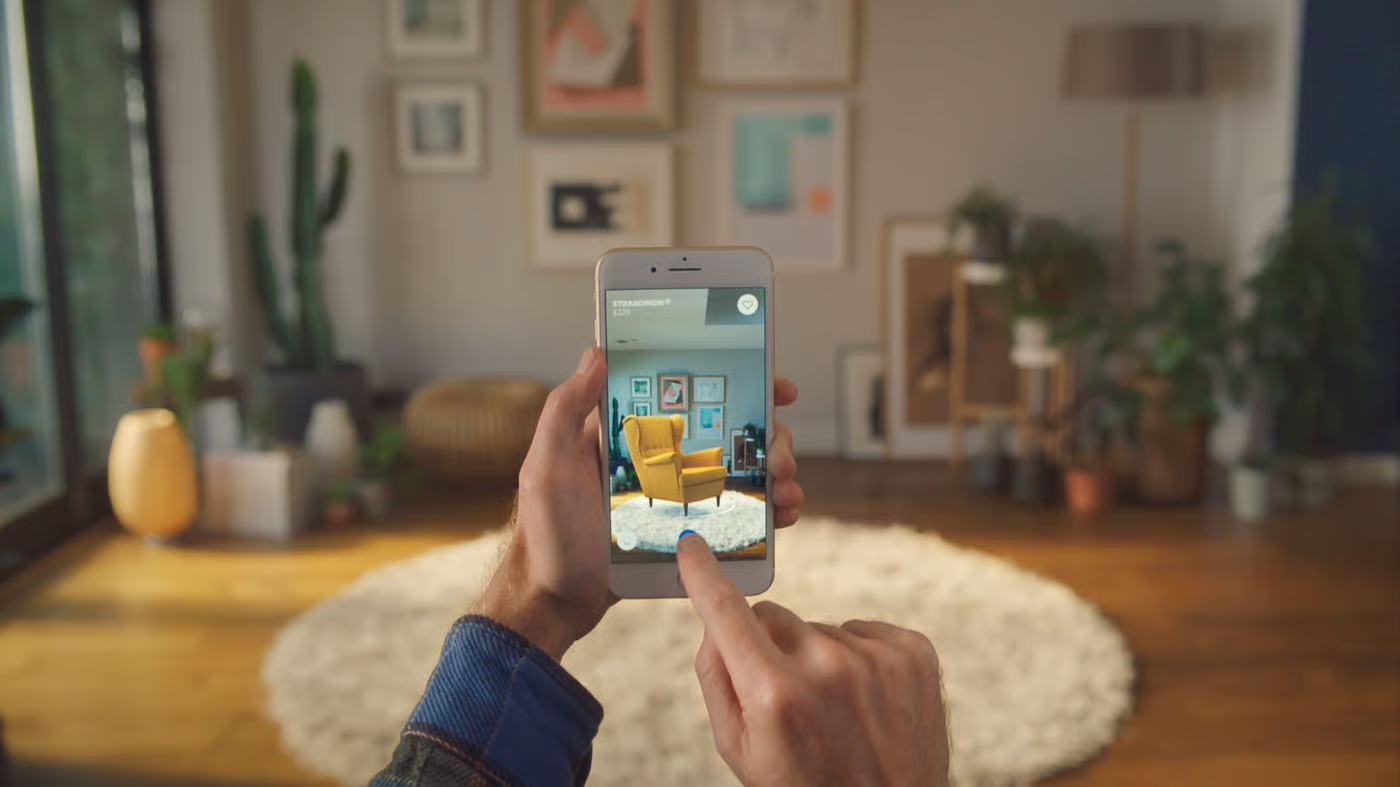
That simulation is fragile, and when it fails, returns follow. IKEA Place addresses this directly by allowing customers to place life-size 3D models of furniture inside their own environment. The value is not novelty. It is precision. When you can see a sofa in your actual living room, the decision becomes significantly easier because the question has already been answered.
Clarity reduces hesitation.
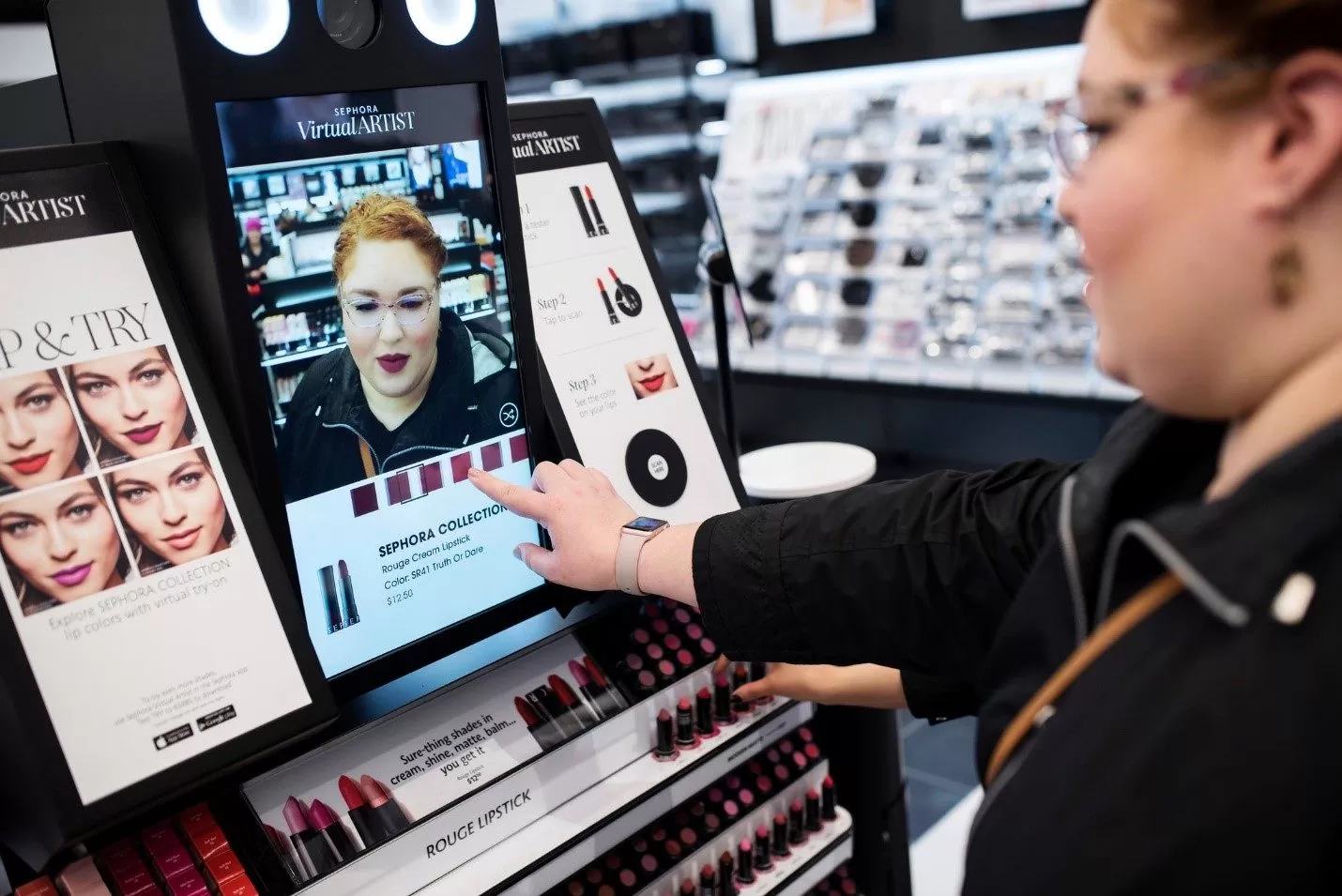
A similar shift happens in beauty, where the problem is not space but identity. Trying a product in store has always involved friction: hygiene concerns, inconsistent lighting, limited availability. The result is guesswork, and guesswork slows decisions. Sephora Virtual Artist removes that friction by allowing people to see products applied to their own face in real time, under conditions that feel closer to reality.
The difference is subtle but important. The customer is no longer evaluating a product in isolation; they are evaluating themselves with the product. At that point, the experience stops being descriptive and becomes personal.
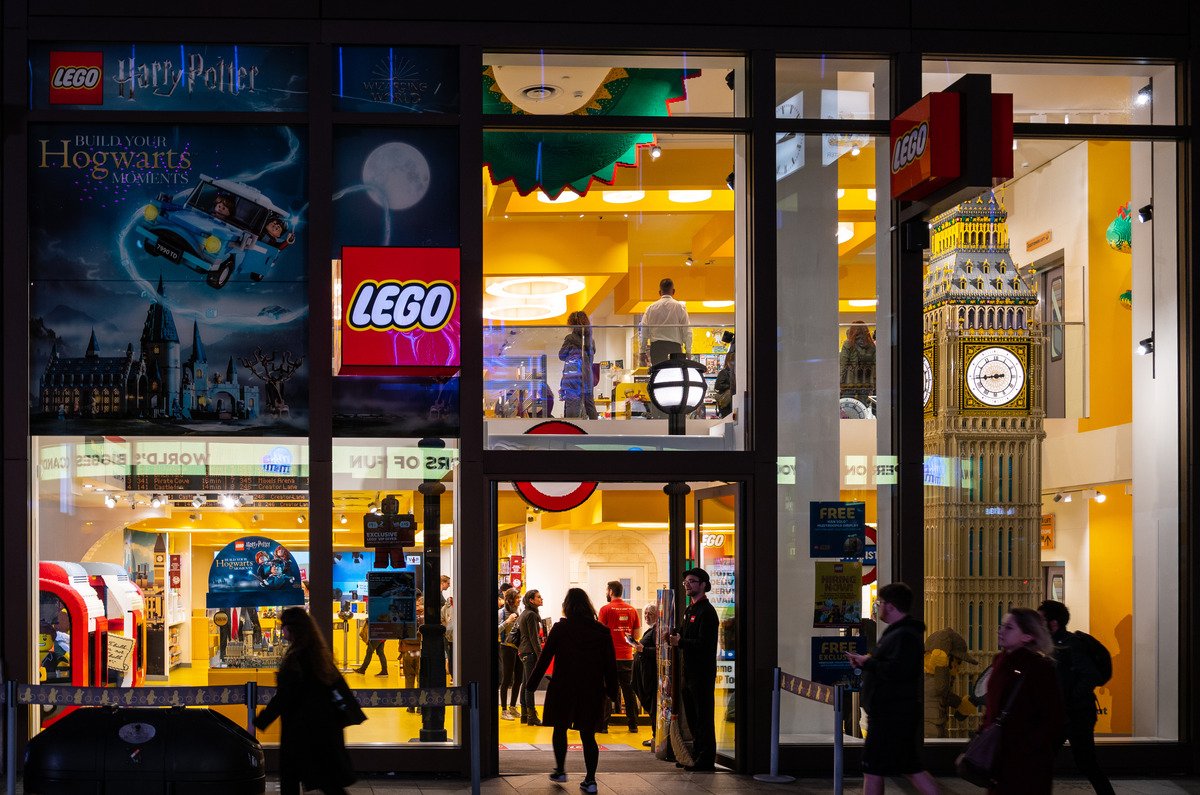
Some experiences go one step further by embedding the product inside a narrative context. In recent updates to its Leicester Square flagship, LEGO Group has created interactive zones where visitors move through environments tied to its storytelling universes. These are not simply displays, but spaces where building, exploration, and narrative overlap.
The product is not presented and then explained, it's enjoyed in a context where its meaning is already visible. And that changes the role of the retail environment entirely. It becomes less about showcasing objects and more about making them legible.
The problem is not the technology, it's the intention behind it.
Many immersive activations are still designed to maximise attention rather than reduce uncertainty. Large screens, dramatic projections, and complex installations can attract people, but they do not necessarily help them decide. If the experience does not answer the customer’s practical questions, it becomes decoration. The most effective immersive product experiences tend to do three things well, often without drawing attention to themselves: they make the product visible in context, they allow safe experimentation, and they remove doubt before the purchase happens. When those conditions are in place, immersive technology stops behaving like a spectacle and starts functioning as a tool.
Immersive experiences generate a lot of data, but most of it says very little about whether anything actually moved.
If the objective is to help people decide, the useful signals are the ones that reflect reduced uncertainty: conversion lift, fewer returns, deeper interaction with the product itself, and the tendency to come back before purchasing. These behaviours are less about interest and more about resolution. They suggest that the experience is doing some of the work that would otherwise be left to the customer.
Which, in turn, shifts the question slightly. It is not whether people liked what they saw, but whether the experience made the decision easier.
Immersive technologies are often described as tools for creating memorable brand moments. That is not incorrect, but it tends to focus on the surface of the experience. The more durable value sits somewhere quieter.
It lies in helping people understand what they are buying with enough clarity that the decision no longer feels like something they have to figure out on their own. When that happens, the experience has already done its job, not by impressing, but by removing friction.
This is also where the next wave is heading. As spatial computing and generative systems evolve, products will no longer be presented in a single fixed form, but across a range of plausible contexts. A piece of furniture will sit inside different interiors, a garment will adapt to different bodies and occasions, a vehicle will move across multiple environments without leaving the showroom. None of this replaces physical experience, it simply expands the space in which a product can be understood before a decision is made. And when that understanding is clear enough, something shifts: the product stops behaving like a question and starts behaving like a choice.
For marketers, that shift is less about engagement and more about effectiveness. And over time, effectiveness compounds into something more stable than attention: trust.